

A SIP OUT OF ITS DEEPEST BEING …
A DEEP LONGING FOR WHAT IS GONE, DRIVEN BY THE SAD UNDERSTANDING THAT IT MAY NEVER RETURN.
A SHADOW OF RESIGNATION AND FATALITY IS CARRIED WITH THE SENTIMENT.
TO LAMENT, TO DESIRE, TO YEARN AND TO LONG FOR SOMETHING WITH SUCH VEHEMENCE, KNOWING THAT IT WAS NEVER WITHIN THINE REACH.
A SENTIMENT THAT ONE CANNOT RETURN TO THE PAST OR THROW ONESELF INTO THE FUTURE TO FORCE IT TO BECOME THE PRESENT.
A HOME THAT CAN'T BE RETURNED TO IS LONGED FOR, A HOME OF A TIME THAT NEVER WAS.
A LONGING FOR TIMES GONE BY, A DESIRE FOR THE BYGONE, AND A SORROW FOR THE VANISHED SPACES OF ERAS YET TO COME.
AN END, THUS THERE IS A DESIRE FOR SOMETHING THAT HAS NO END!
TO EXPERIENCE A DREAM THAT CANNOT BE DREAMT.
-IMAGINALIA-
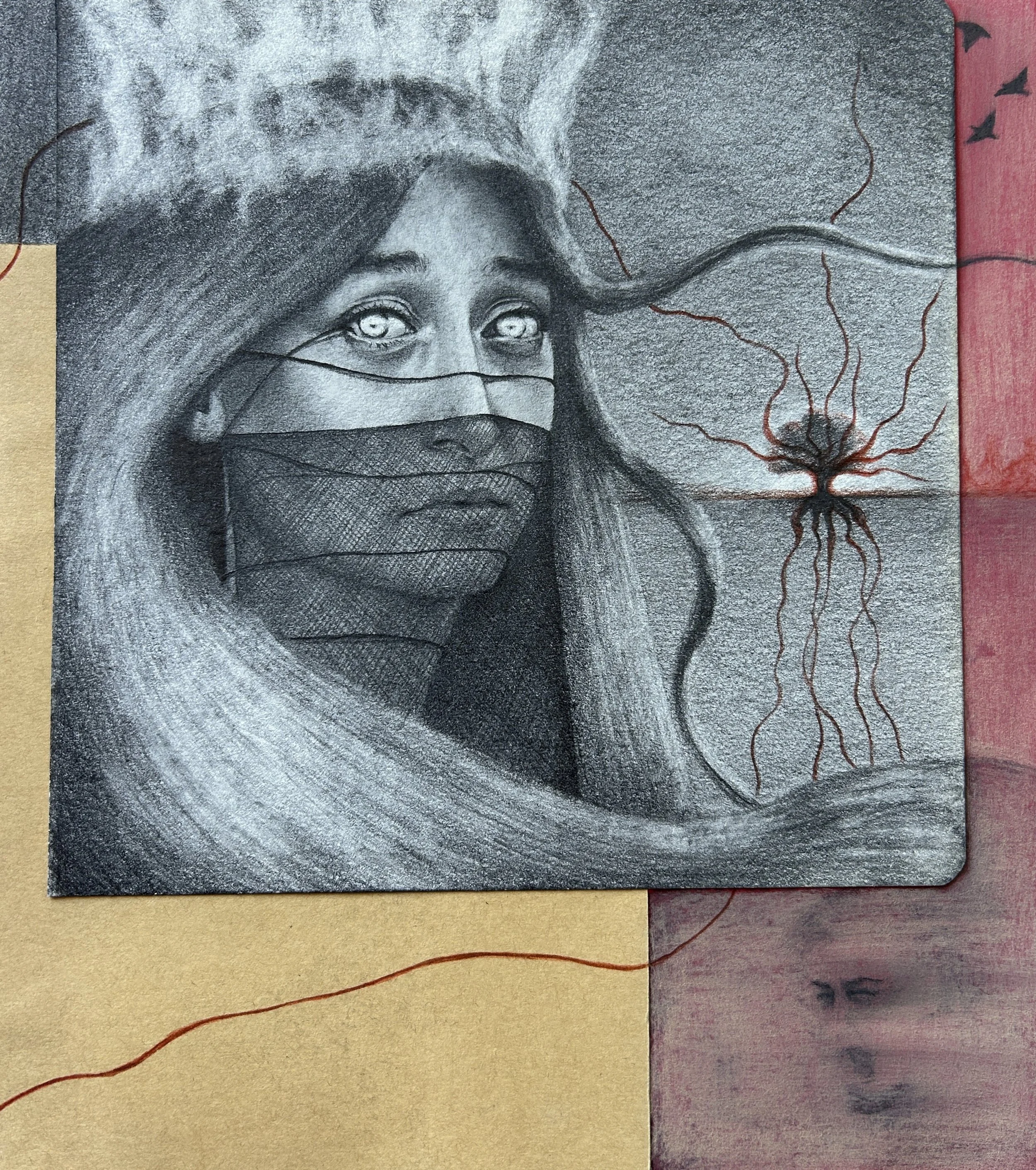
as I drift away, crown me with the Burning fire, 2026
mixed media on paper
24 × 27 cm
Private collection
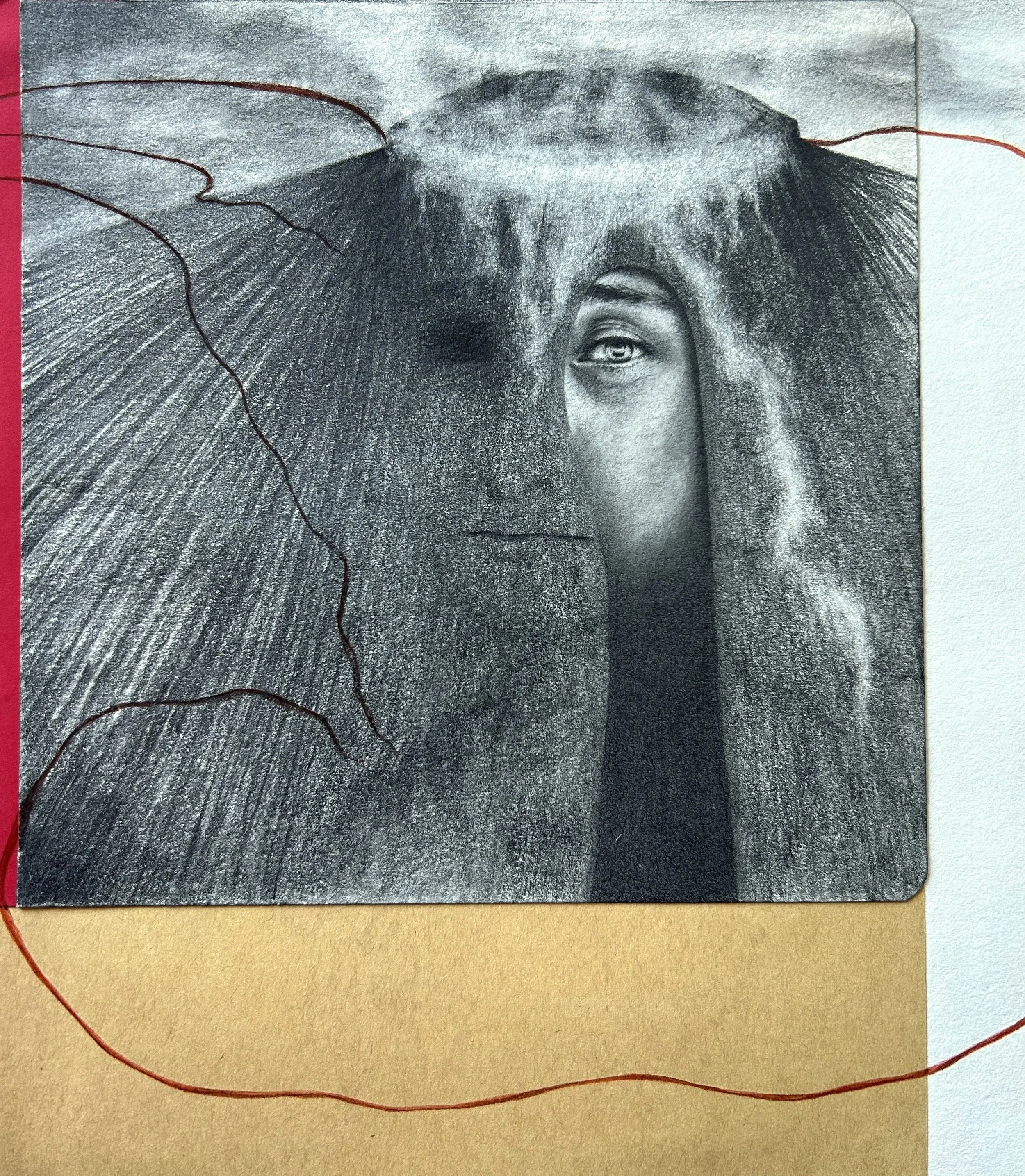
Now I see, but do I truly see…, 2026
mixed media on paper
24 × 27 cm
the realm and the artistic process
There is no discernible beginning. There is an absence of closure.
The signs are currently suspended.
Imaginalia is defined as that which is recalled in an almost remembered state.
This is a concept that persists long after the initial visual impression has been forgotten.
This is not a work of fiction; it is a concept that is equally as fragile.
In Imaginalia, the concept of an inner territory shaped by visual memory, symbolic fragments, and a lucid trust in the imaginary is explored. The artistic works under consideration are characterised by an ambivalent relationship with the familiar and the enigmatic, suspended in a liminal space between these two states. The series is initiated through a dialogue with the literary works of C.S. Lewis, particularly his reflections on imagination as a mechanism of knowledge and emotional memory. The concept of Narnia extends beyond a mere literary reference, serving as a conceptual foundation for an artistic practice that is oriented towards that which eludes complete definition. This artistic practice is distinguished by the creation of images that exist at the threshold between certainty and oblivion.
There is an absence of explicit narrative in my artistic practice. Some of these appear as delicate presences, composed of graphite or technical mixtures that do not aim to create visual spectacle. Others, however, evoke a sense of notation, recording, and preservation. The titles of these works bear a striking resemblance to fragments of conversations. The texts do not illustrate, explain or translate. The cohesive force that binds these elements is a fidelity to a mode of perception that precedes meaning – a kind of faith in the visual before it becomes an idea.
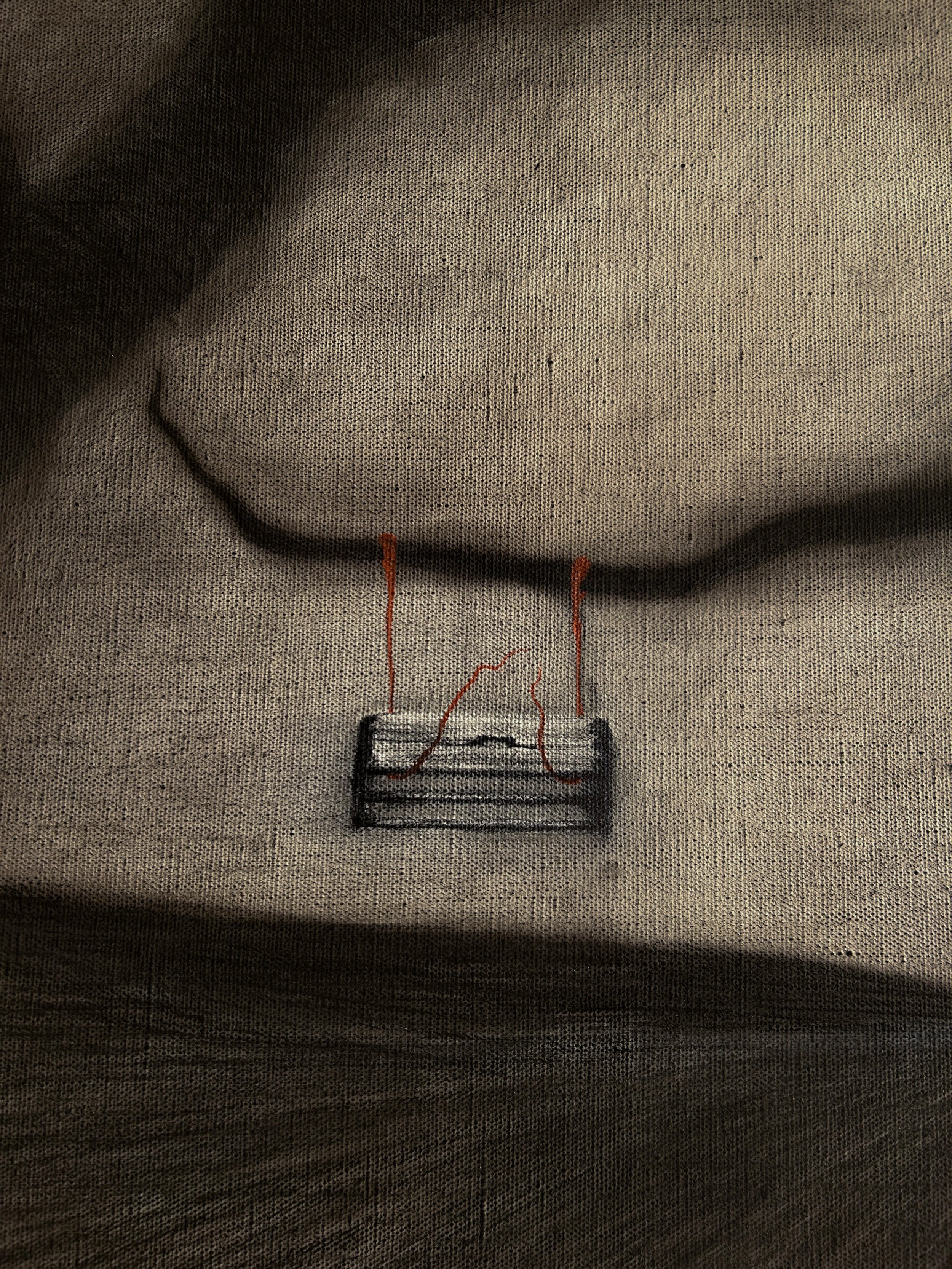
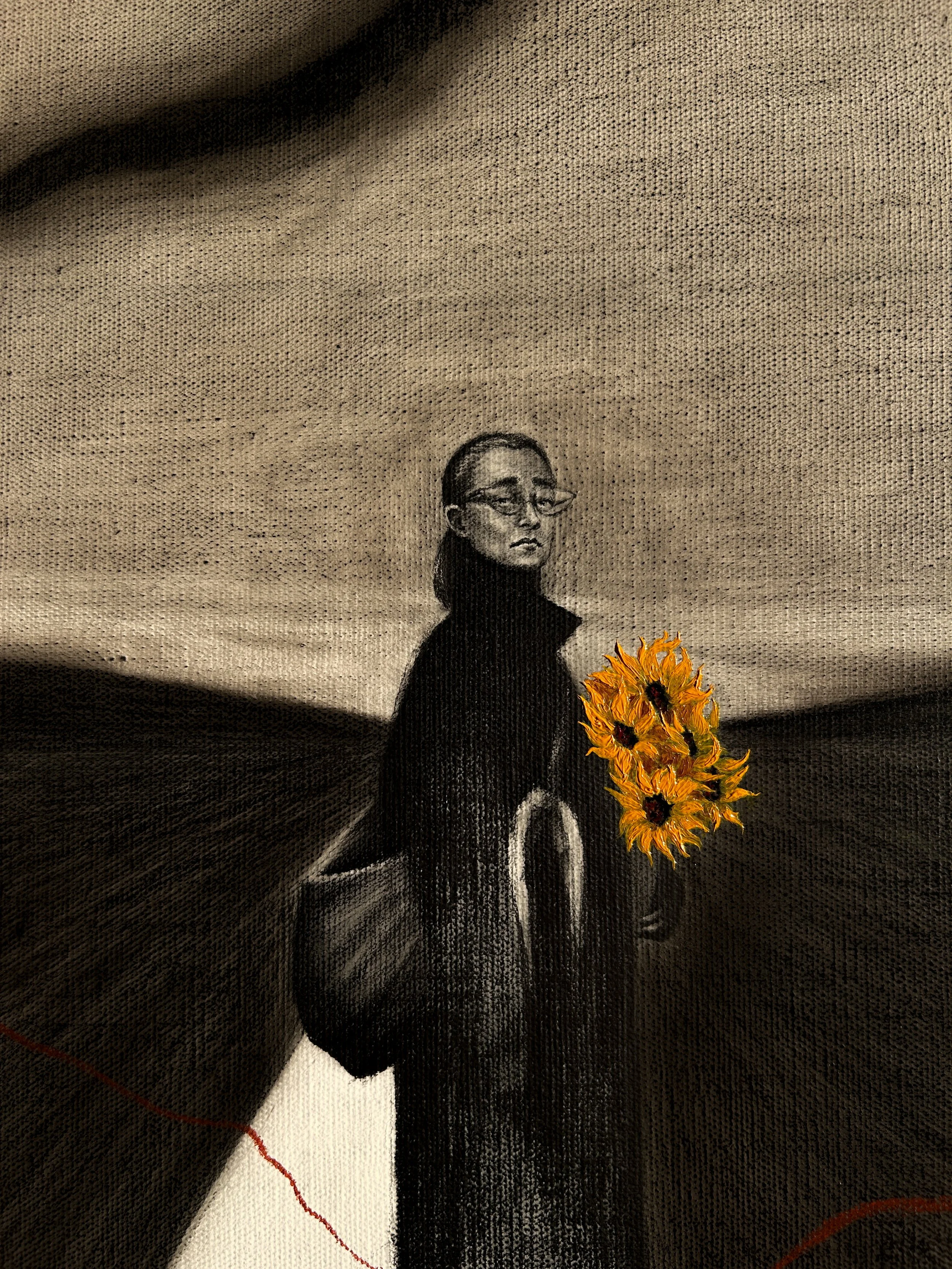
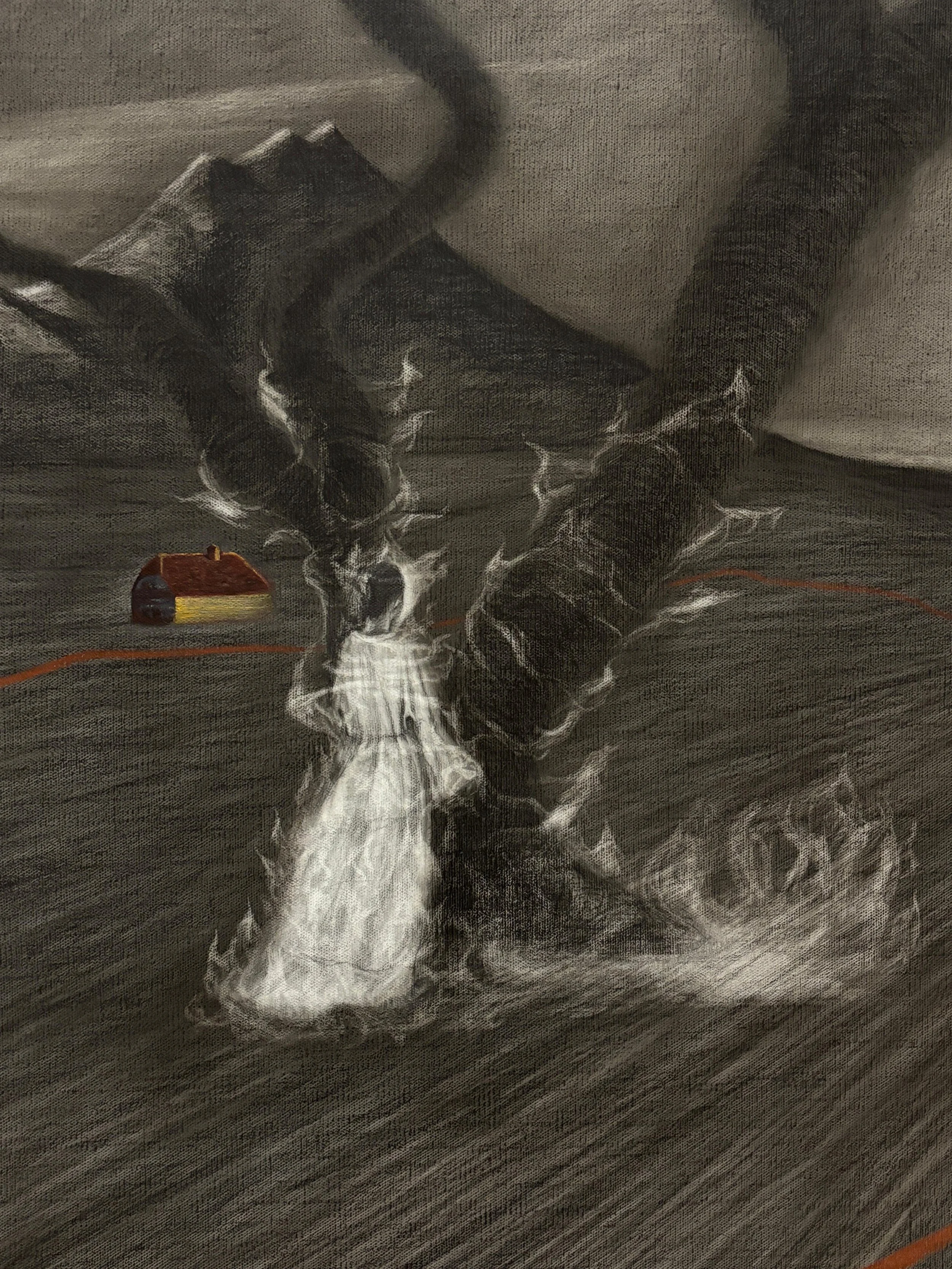
The objective of Imaginalia is not to achieve thematic coherence or discursive clarity. It is important to note that what remains is what persists after the story has been consigned to oblivion: fragments, questions, references revisited with a renewed gaze. Imaginalia is not a tangible place, but a state of being that enables a connection with a bygone era. It is an internal temporal realm in which imagination is not a means of escape, but a way of acquiring knowledge. The piece entitled "There was once in the present" is an exploration of the human condition and the universal yearning for a sense of belonging and a place of refuge, free from the perils of the world. This yearning, the piece suggests, is perhaps most acutely experienced during the period of childhood, when the world appears in its purest and most innocent form. In the Book to Leviticus, Chapter 25, in the Hebrew Bible the concept of the land being restored to its pre-existing conditions through a jubilee year is discussed. The present work of art builds upon this concept in the Book of Revelation, which details the second coming of Christ and the state of the restored earth. The attempt to depict this concept in visual art is somewhat unsuccessful, as the idea evokes more questions than it answers. This is because the concept of rest and peace, which can only be achieved in a new, intentionally designated space, is not easily represented. A correlation has now been established between this feeling and childhood. Indeed, it is regarded as the most proximate source of inspiration for comprehending this state and visually creating this restored land.
The overarching artistic process, directed towards a mode of perception that precedes meaning, is significantly influenced by recollection, memory, and the exploration of internal temporal domains, which, in conceptual terms, corresponds to revisiting experiences from one's childhood. Therefore, childhood functions not merely as a subject, but as a touchstone of pure experience — a memory of innocence and refuge. To illustrate this point, an analogy can be drawn: If the adult artistic process is compared to the mapping of a lost city of perfect refuge, childhood can be regarded as the most reliable, despite the presence of fragmentation, historical record or primary source material available. It provides the essential feeling or foundational blueprint for the city's desired state.
It can be stated that the significance attributed to these creations exceeds the author's initial estimation. The process of creating artworks is not a revolutionary one; however, it is an artistic process that culminates in the creation of an unexpected work of art and the discovery of new insights into oneself. This process does not merely result in the encounter with an artistic object, but also with one's own identity. Vulnerability and honesty are connected in artistic creation. It is proposed that when these elements are given full expression, they act as conduits for the manifestation of truth that transcends individual consciousness. This assertion suggests that the act of artistic creation serves as a medium for the exposure of the self, thereby facilitating a process of self-discovery that is precipitated by the final product of artistic expression.
A.L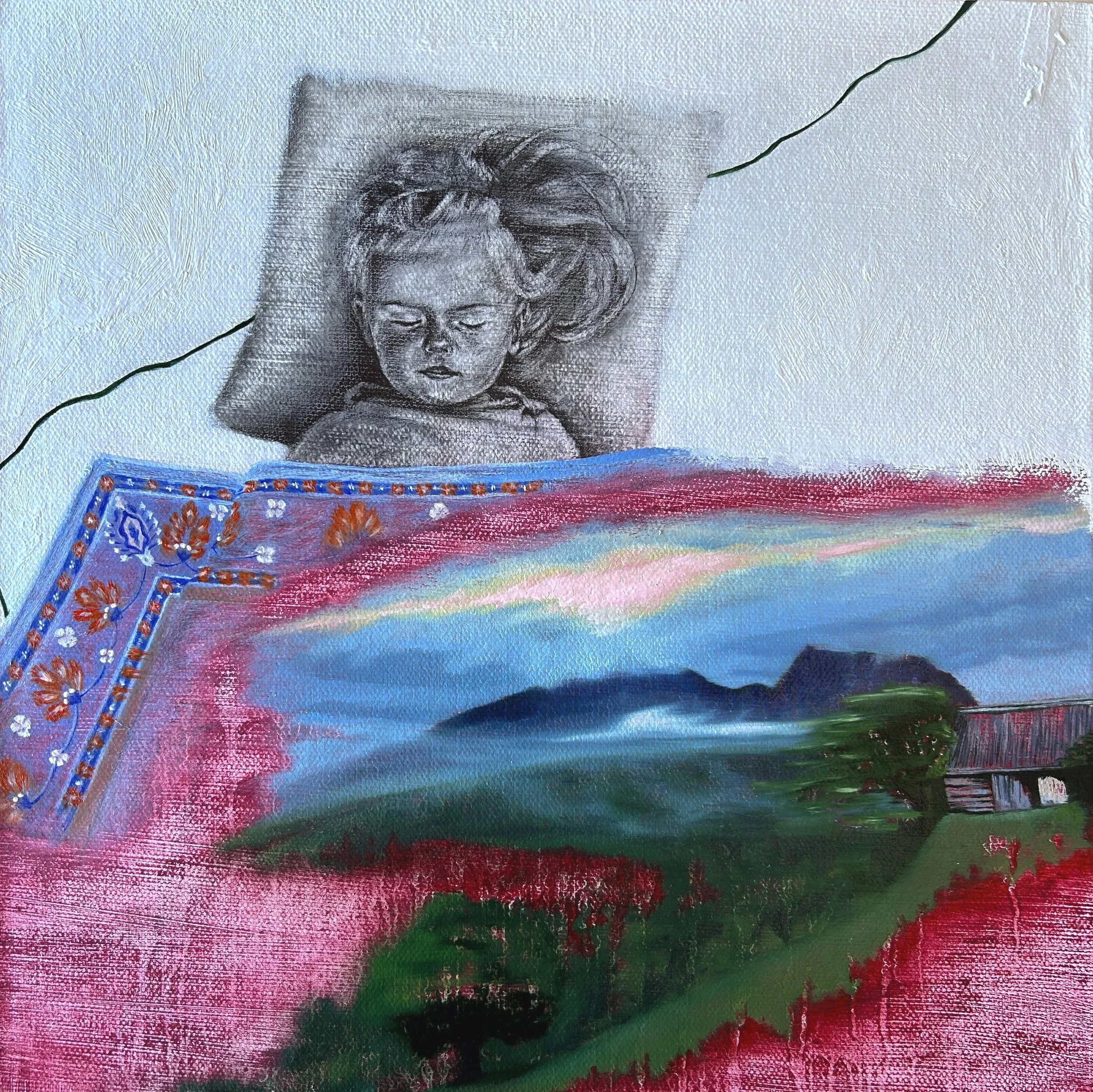
There was once in the present, 2024
mixed media on canvas cardboard, graphite and oil paint
30 x 30 cm
Private collection
All Images, Text, Content Copyright © 2026 Andrada Lolu | All Rights Reserved